Unit mix drives the price, not the footprint
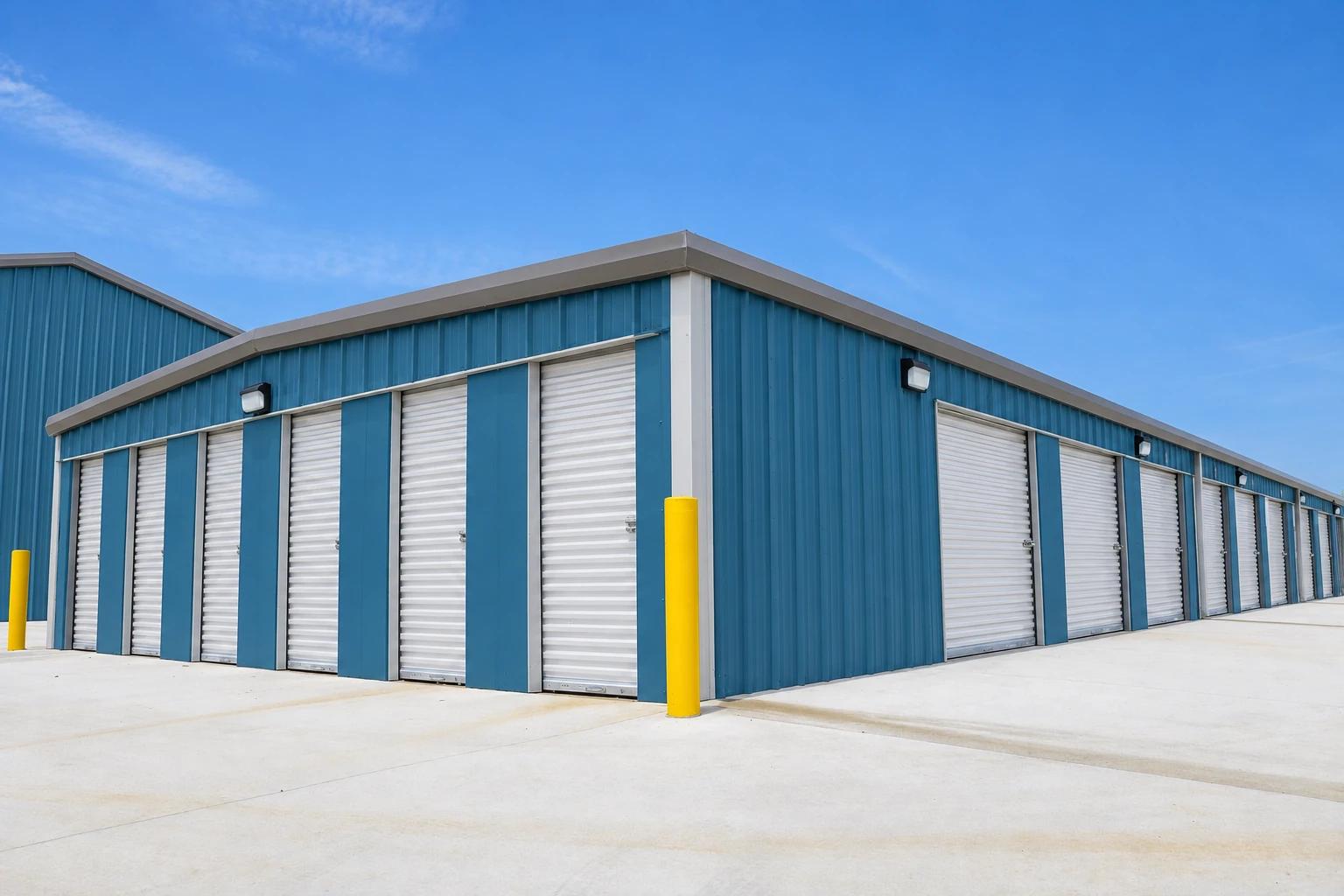
Two identical 40 × 100 shells can differ substantially in price depending on what goes inside them. A building divided into forty small units needs forty roll-up doors, forty framed openings, and partition framing throughout. The same shell as ten large units needs a quarter of that.
So the first question is not how big the building is. It is how many units, at what sizes — because that determines the door schedule, and the door schedule is where the money goes.
Bring us the unit mix you intend to rent and we will quote the building that delivers it. Only have a footprint so far? Send that and we'll work out the mix with you.
Single-row or double-row
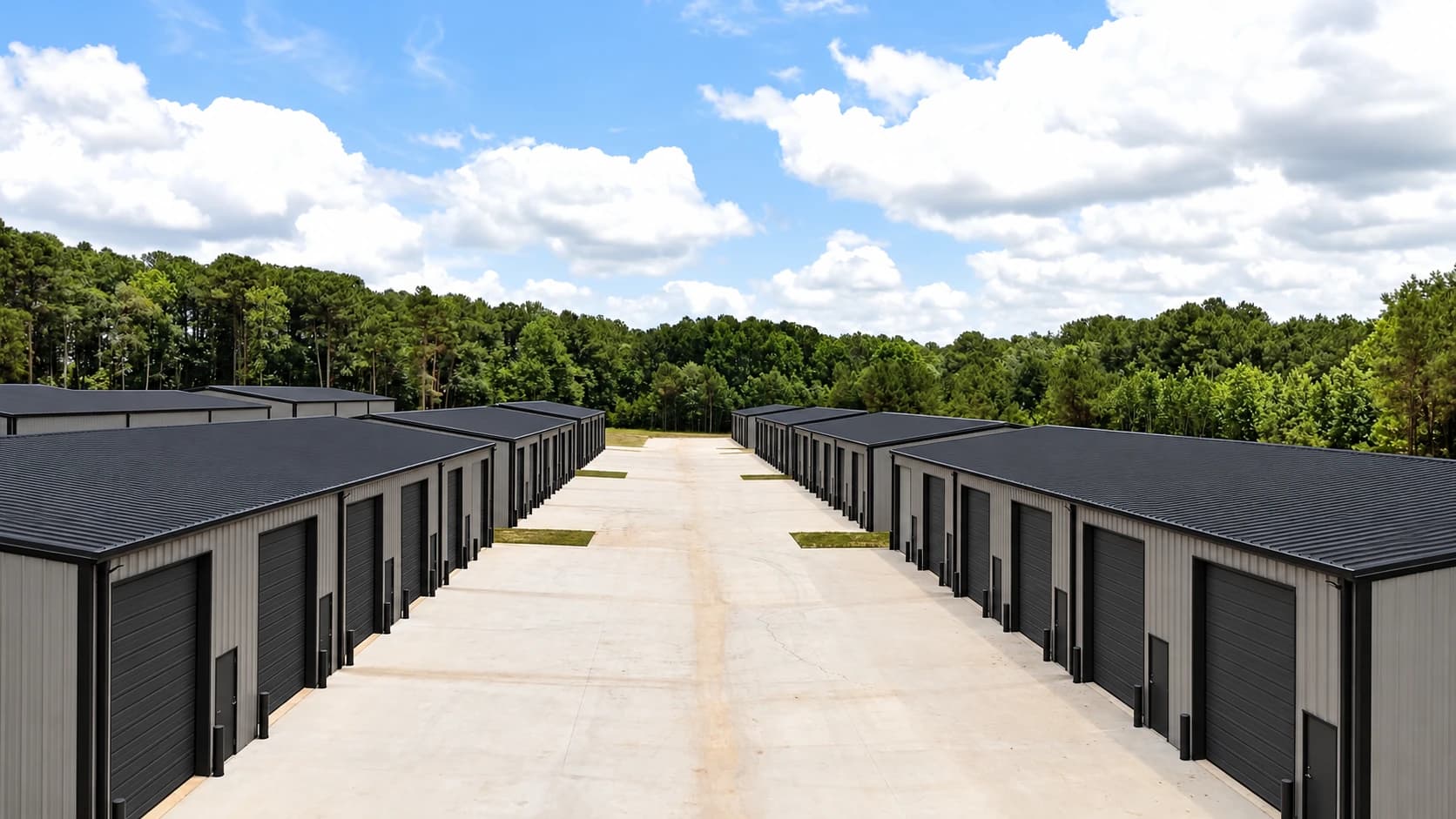
A single-row building has doors on one side and a back wall on the other. Simple, cheap per unit, and it needs drive access down one side only.
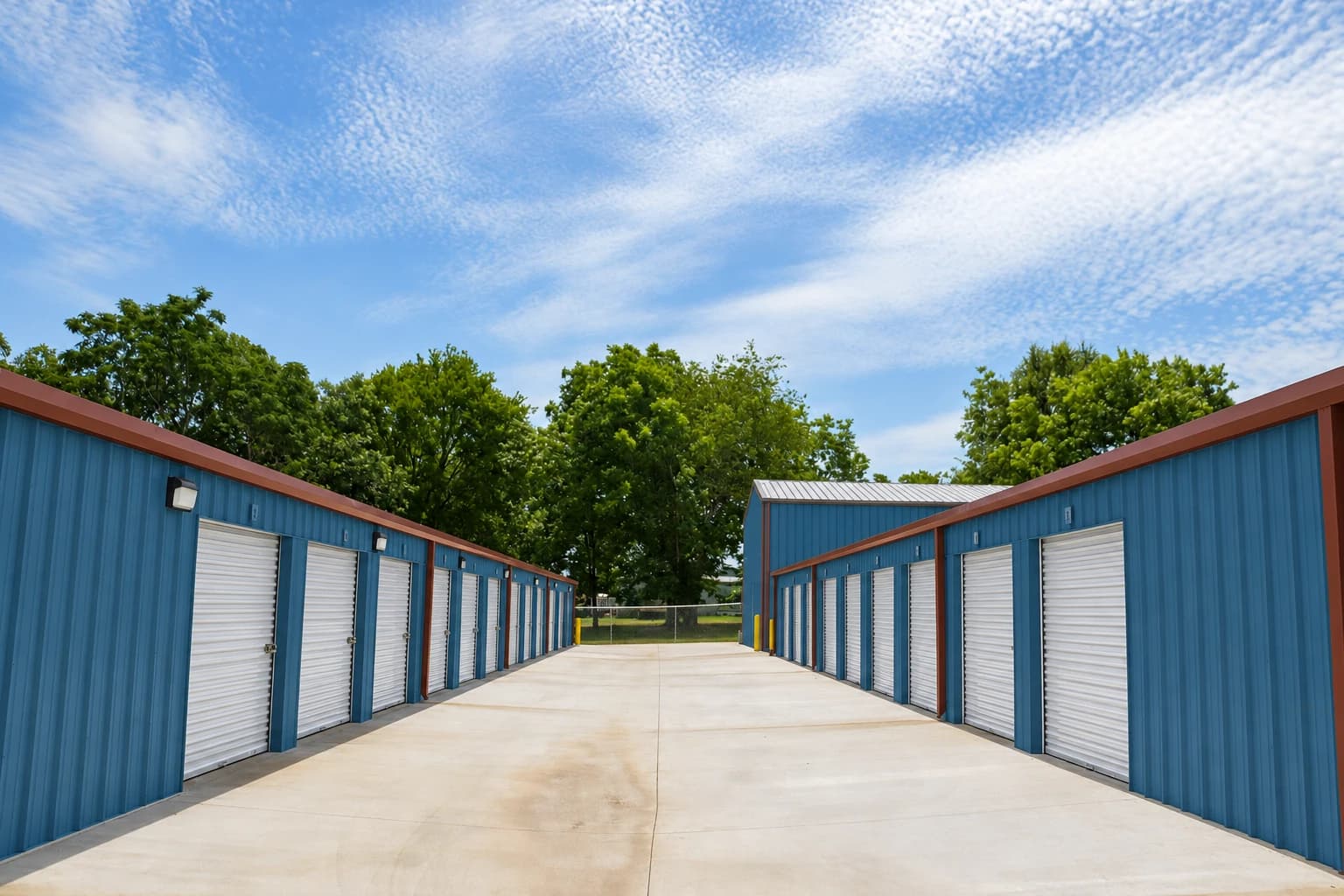
A double-row building puts units back-to-back with doors on both sidewalls. It uses land far more efficiently and gives you roughly twice the rentable area per acre, but it needs drive access on both sides and a wider footprint.
Which one wins is usually decided by the site rather than the building — how the parcel is shaped, where the access comes in, and what the setbacks leave you. Send us the parcel and we'll lay out the option that fits it.
Climate controlled changes the whole specification
A conditioned storage building is a different product. It needs insulation, a sealed envelope, and an HVAC system sized for the space — and the frame carries the extra weight of all of it.
It also commands materially higher rents in most markets, which is why operators build it. Tell us on the form if any of the facility is climate controlled, and we engineer the frame for it and quote the insulation as its own line.
Eave height, matched to what you store
Storage buildings tempt operators toward low eaves to save money. That is usually right for standard units — and if any part of the facility is meant for vehicle, boat, or RV storage, we give those bays real height, either in one building or as a second structure.
If vehicle storage is part of the plan, tell us on the form. We will lay it out as a taller section or a separate structure and quote it the way that suits your site.
The most common sizes for a self-storage building
Thirty to forty feet suits a single row with a back wall. Sixty and up lets you run units back to back with doors on both sides, which roughly doubles rentable area per acre.
| Size | Square feet | Starting price |
|---|---|---|
| 40 × 100 | 4,000 | $64,600 |
| 50 × 100 | 5,000 | $80,250 |
| 60 × 120 | 7,200 | $109,080 |
| 80 × 120 | 9,600 | $144,480 |
Prices are the same published numbers as our pricing page, kit only, delivery included. Any size can be built to order; see popular sizes and prices. Height is not in this table because it is set by what happens inside: Standard units want a low eave to save money. Vehicle, boat and RV bays want real height. Tell us the mix and we lay it out in one building or two.
Shell only — roll-up doors, partitions, slab and site work are separate. Starting prices, not quotes. Published prices and the eight price drivers →
Price your size and ZIP code in the estimator above →
Prices are for the building shell. Because the door and partition count varies so much between operators, a storage quote is one of the few where the published price is only a starting point rather than a close estimate. We will give you a real number once we have the unit mix.
Related guides
- Waiting on financing? Lock your price nowOrder to lock your building's price while your loan comes through, and have the design and engineering done by the time it closes.
- Should you wait for steel prices to drop?Steel has been rising. Why locking your price at order beats betting on the market.
- How to get a permit for a metal buildingOrder first, permit second: the eight steps from your order and design to the stamped blueprints your building department asks for.
- What a steel building actually costsThe kit is one of five costs. Our published prices, plus who quotes the other four and what to ask them.
- How to compare steel building quotesSeven questions that make two quotes comparable, what a non-answer sounds like, and our answers to all seven.