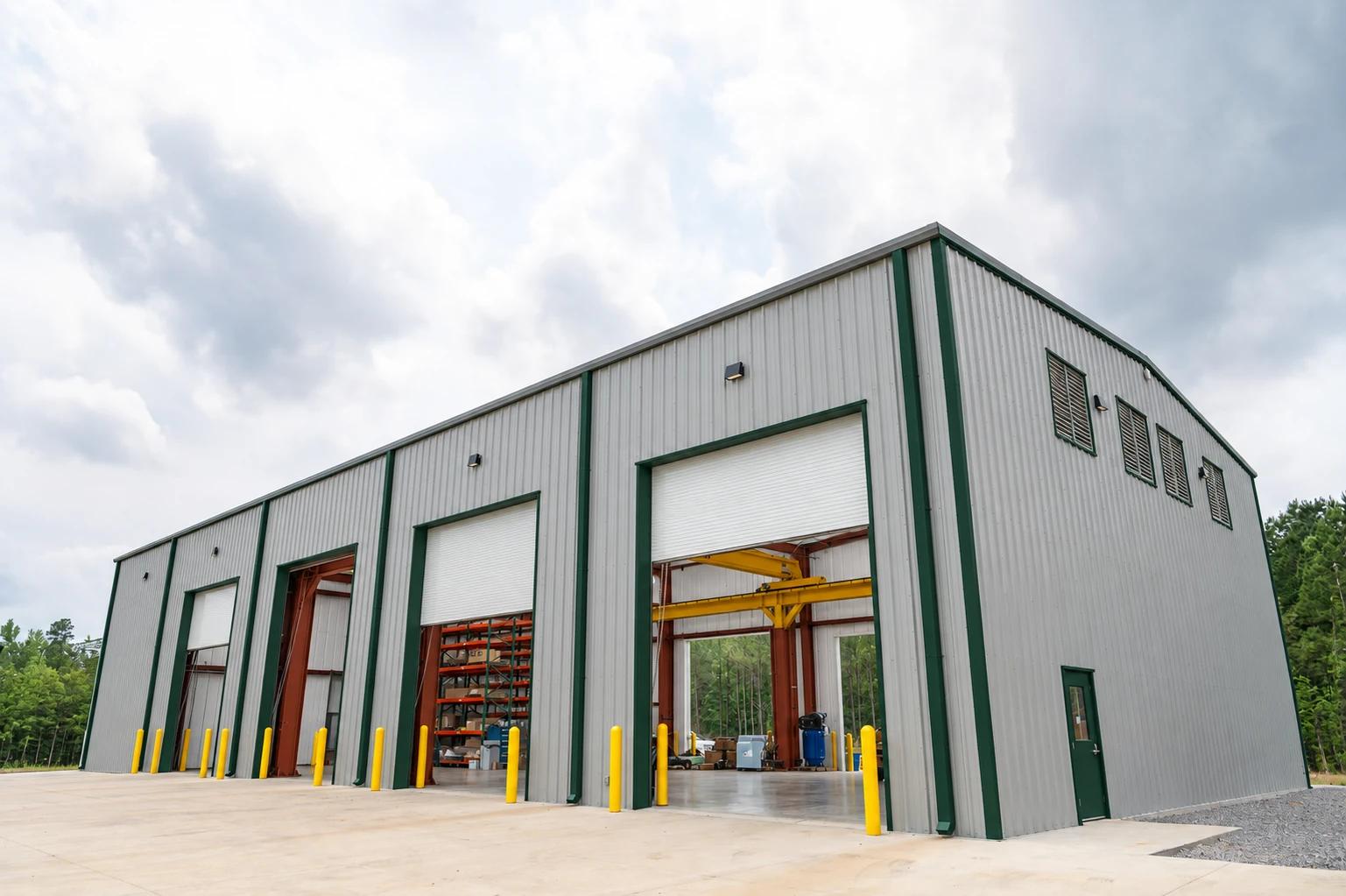
The difference starts with the material
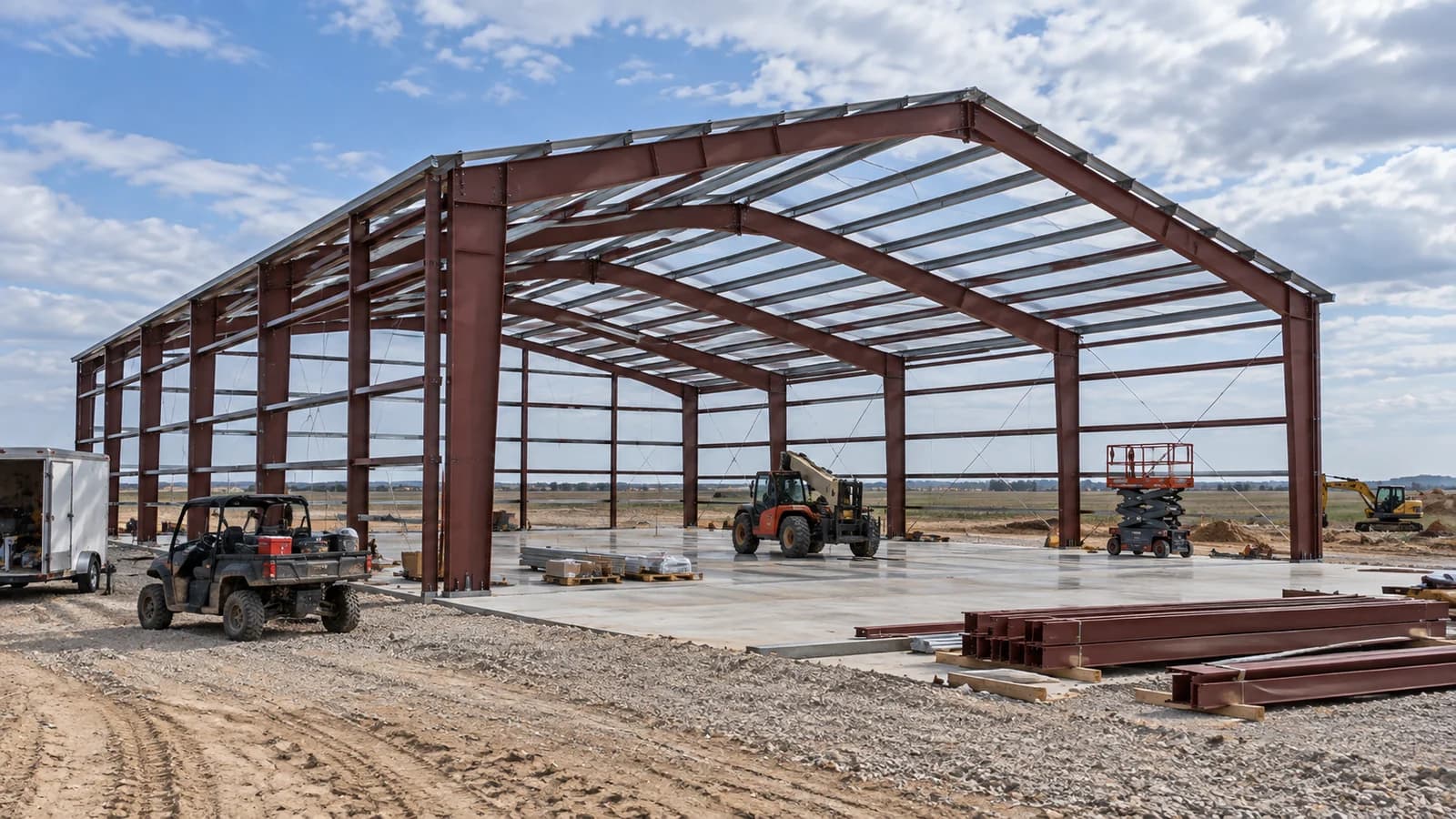
Red iron — hot-rolled steel
Rolled while it is hot, then cut into plate and welded up into I-shaped columns and rafters. Because the section is built from plate rather than formed from one sheet, its depth can be varied along the member — deeper where the bending is greatest, shallower where it is not. The red is the oxide primer, and that is where the name comes from.
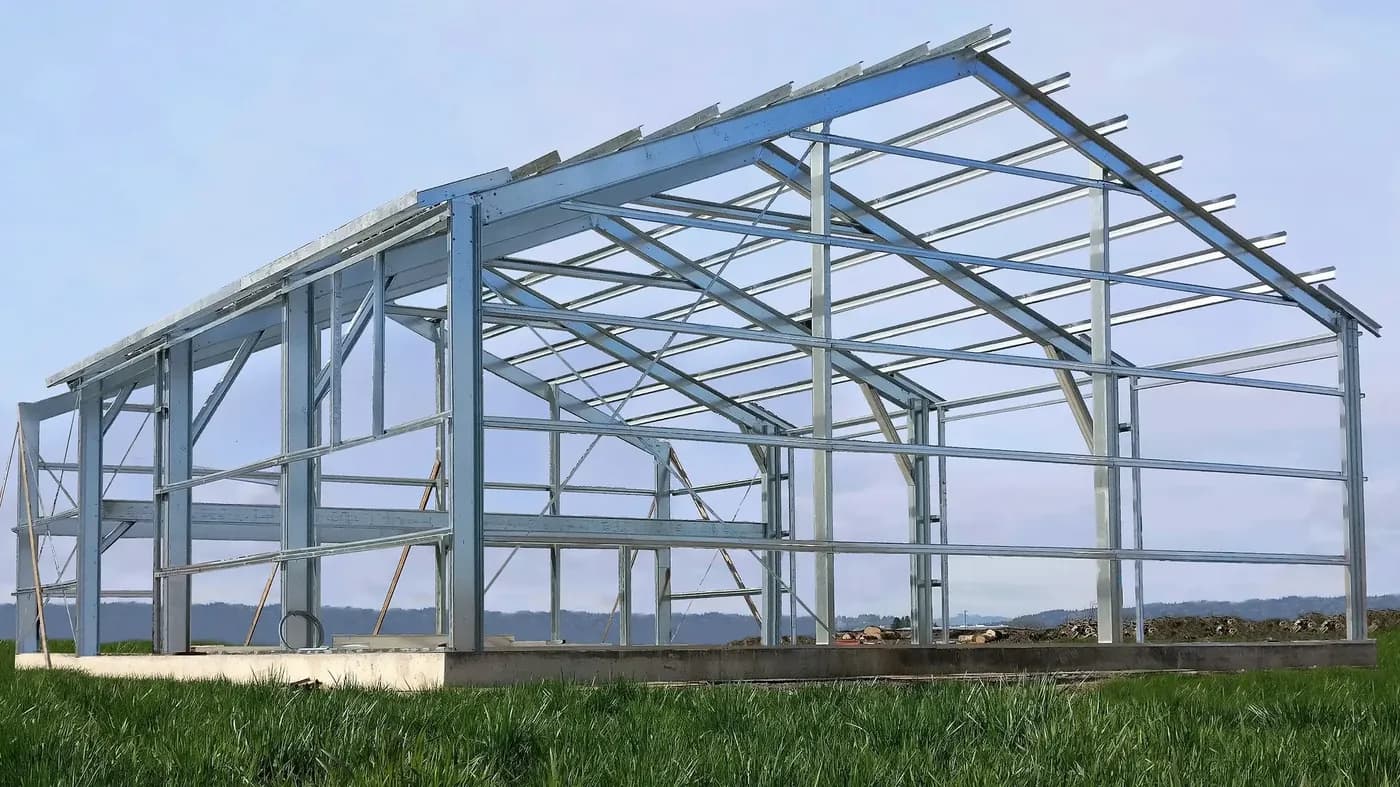
C-channel — cold-rolled steel
Coil steel formed into a C at room temperature — no heat. The forming itself work-hardens the material, so each channel is stronger than the coil it came from. Two channels are then bolted back to back, web against web, and that assembly is the I-beam that carries the load. Same shape as the welded one, arrived at a different way — and no welding anywhere in it.
Both of them clear span
This is the thing most often got wrong, including by people selling these buildings. Cold-formed framing is not limited to narrow buildings. A C-channel building can carry 60 feet with nothing standing in the middle of it, and so can a red iron one. Both are engineered systems, and both get engineered to the span, the loads and the use of your particular building.
So your span does not rule either one out on its own. Tell us the span on the form and we engineer whichever system you choose to fit it.
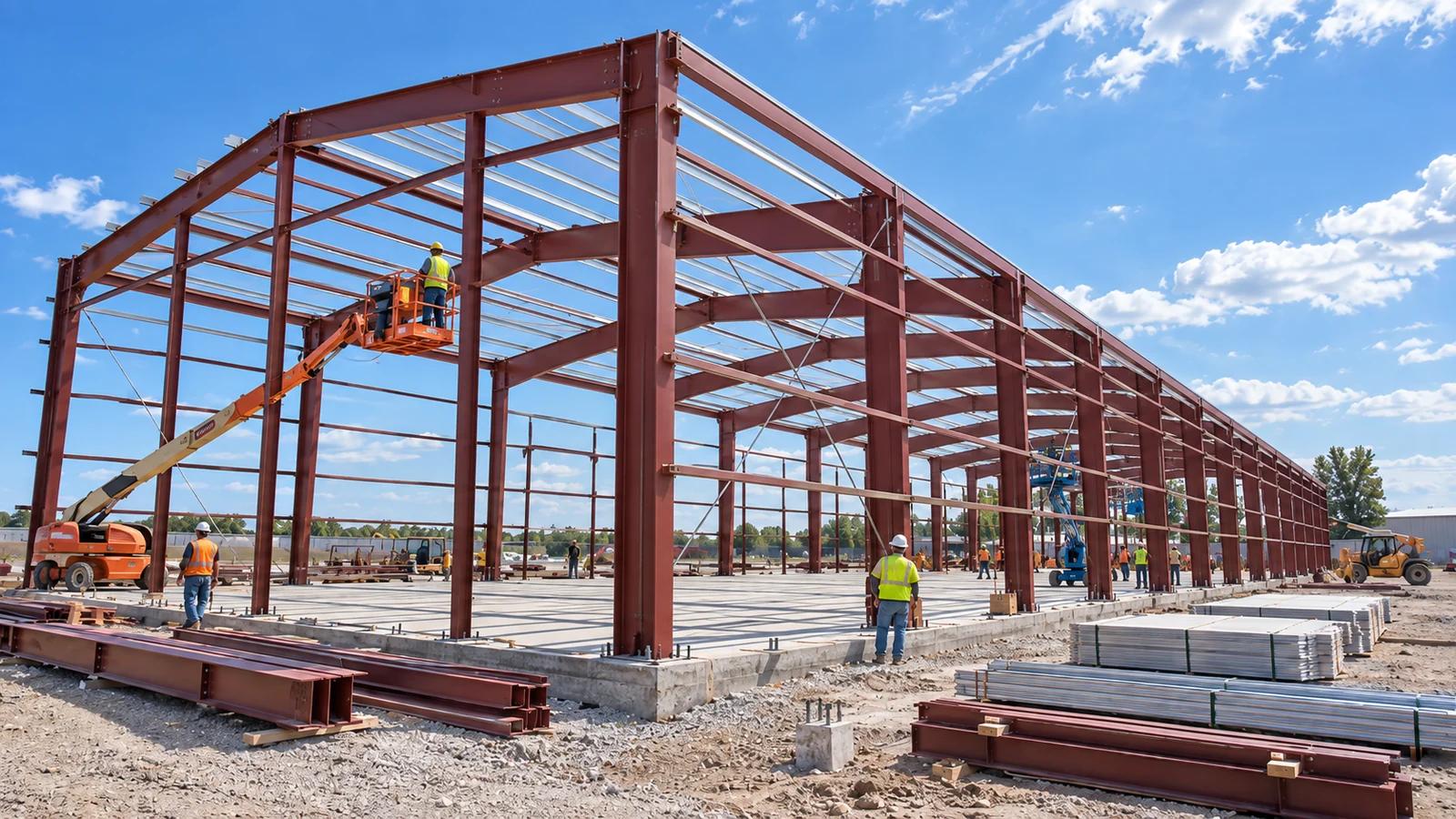
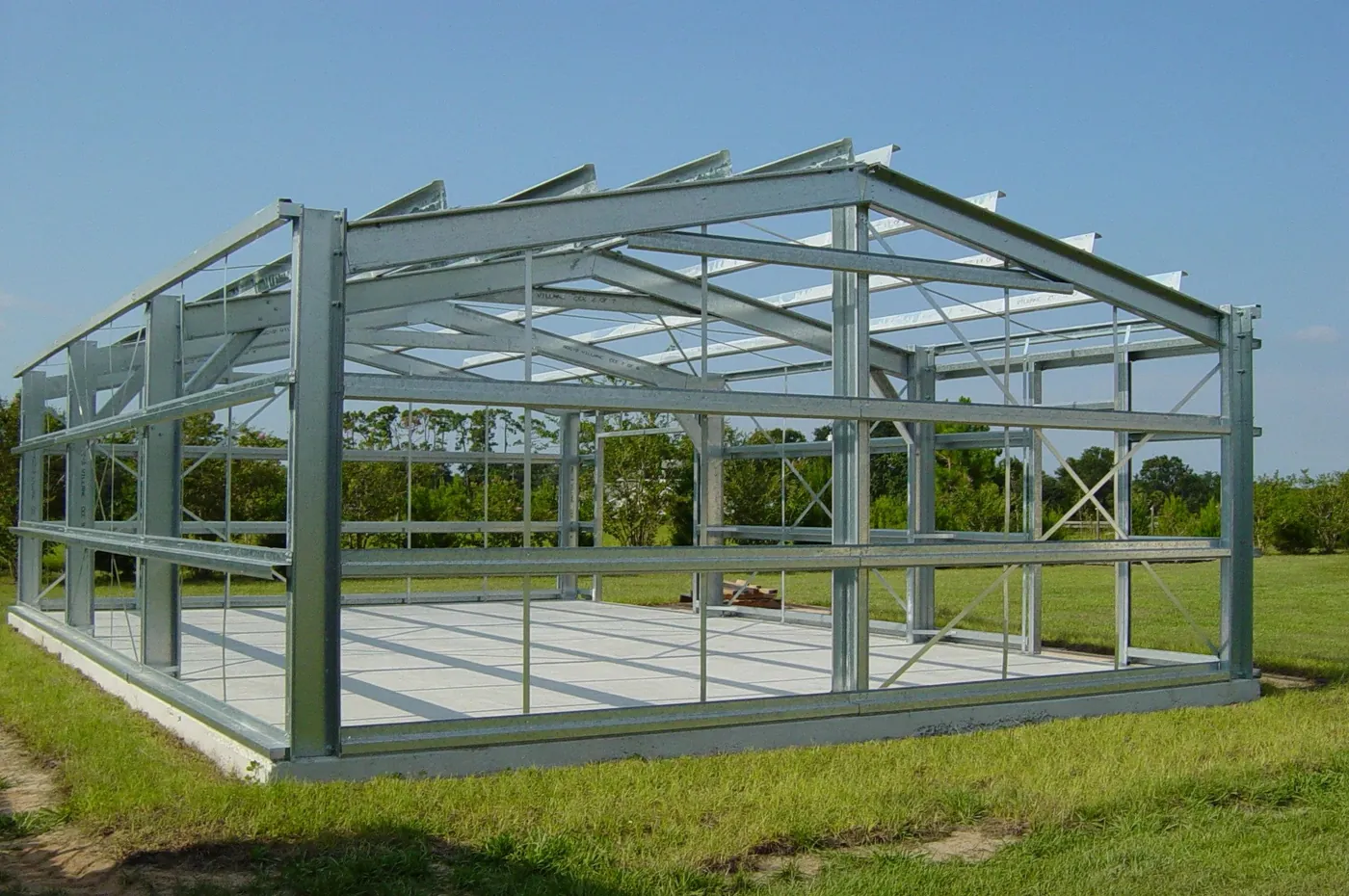
What actually differs
| Red iron | C-channel | |
|---|---|---|
| The material | Hot-rolled iron | Cold-rolled steel |
| How it is shaped | Rolled hot, cut from plate | Rolled cold from coil, which work-hardens it |
| The finished member | An I-beam, welded up from plate | An I-beam, two channels bolted back to back |
| Section depth | Can change along the member | Constant along the member |
| Assembly | Welded in the plant, bolted on site | Bolted throughout, no welding |
| Pieces on site | Heavier; more lifting equipment | Lighter; simpler to handle |
| Clear span | Engineered to your span | Engineered to your span |
| Quality audit | IAS-accredited factory — welding audited every year | IAS-accredited factory — cold-formed fabrication audited every year |
| Wall and roof panels | Galvalume, bare or painted | Galvalume, bare or painted |
Deliberately absent from this table: a winner. Which system suits a building is an engineering question about span, loads and use, answered per project — not a property of the material.
C-channel is not the budget version
It gets talked about as the cheap option, and that framing does buyers a disservice. Cold-rolled steel framing is a fully engineered structural system with real advantages of its own — tight tolerances, lighter pieces, no welded assemblies anywhere in it, and material that comes out of the forming line stronger than it went in.
Both systems come from an IAS-accredited factory. The accreditation audits engineering, welding and cold-formed fabrication every year, with two unannounced inspections on top, so neither frame is the less-checked option.
Red iron is not the upgrade and C-channel is not the compromise. They are two ways of making a frame, and the one that suits your building depends on what the building has to do.
When comparing quotes, the frame type is in writing
Your quote names the system you are buying, in writing, before you pay anything. Photographs of red iron frames are common in marketing for buildings that are quoted as C-channel, so the written frame type is the one that counts.
Ours puts it on the front page, so there is nothing to ask and nothing to chase. The frame you approve is the frame that ships.
Every Stonebolt quote states the frame type and steel gauge on the front page, along with the design wind and snow loads and the code edition they were calculated against.
Not sure which you need?
That's the normal position to be in, and it's a valid answer on our quote form. Tell us the span, what's going inside, and whether anything hangs from the structure — that's enough for us to tell you which system fits and why.