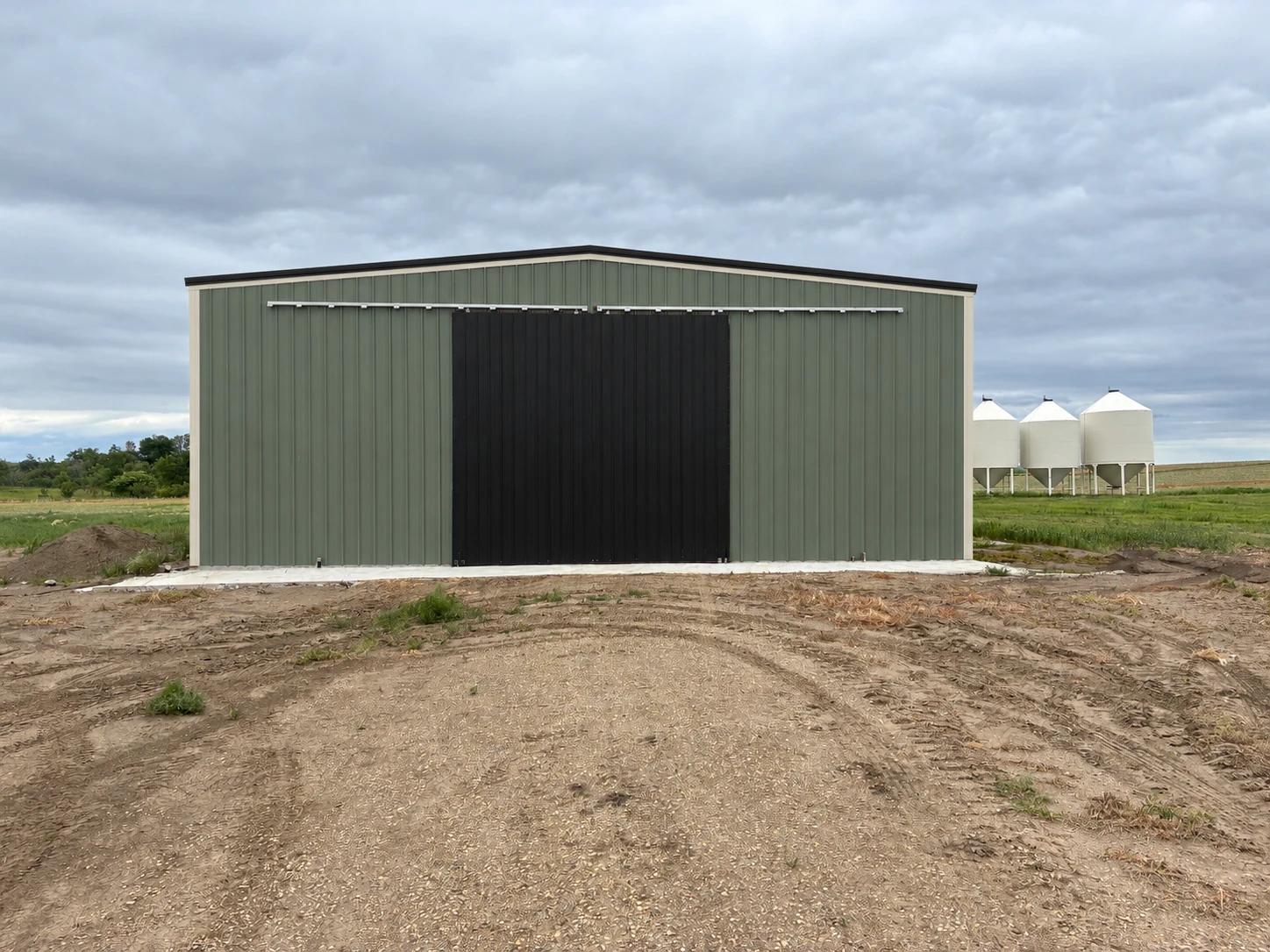
60x100 by eave height
Starting prices, delivered to your site with engineered drawings sealed in your state. Each height has its own page with what fits and the door it takes.
| Building | Starts at | Overhead door | Good for |
|---|---|---|---|
| 60x100x12 | $85,250 | up to about 10 ft | Cars, pickups and a working shop |
| 60x100x14 | $88,550 | up to about 12 ft | Equipment, service trucks and a car lift |
| 60x100x16 | $92,400 | up to about 14 ft | RVs, semis and storage up high |
| 60x100x18 | $96,250 | up to about 16 ft | Combines, semis with room overhead, racking three high |
| 60x100x20 | $100,100 | up to about 18 ft | Crane bays, tall racking and the biggest equipment |
Any other eave height is built to order and priced on your quote. Door height is confirmed on your drawings.
What moves the price from here
At sixty feet of span the design loads stop being a detail and become the dominant cost. The same 60 × 100 in two counties can price far apart, and elevation does it too — a building on the plains and one in the mountains are not the same structure. This is the size where quoting from a state name stops being lazy and starts being wrong.
The biggest movers, in order: design loads set by your county, eave height, and how many openings you cut into the walls. Freight is already inside the number rather than added to it.
What actually fits in 6,000 sq ft
- Equipment and hay under one roof — A full line of machinery with room to work around it, or storage that does not have to be stacked to the roof.
- Riding arenas — Sixty by a hundred is a working arena footprint, and the span is the whole reason to build it in steel.
- Commercial and industrial — A business that runs out of the building, with vehicles inside and room to move between them.
- Fleet and shop combined — Several large machines in at once, plus a bay you can actually work in rather than park in.
Eave height, sized to what goes inside
Height here is driven by the tallest thing that comes through the door, and at this size that is usually a machine rather than a load. Tell us its widest and tallest working configuration — a combine with the header on, a loader with the bucket raised — and we size from that, not from how it sits in the yard.
Tell us what is going inside and we size the eave height around it. If you are between two numbers, we will go over whether the difference matters when we quote.
When 60 × 100 is the wrong answer
If the work happens along the building rather than across it, sixty feet of span is expense you will not use. A 50 × 120 is the same floor area on a narrower, longer frame, made for work that runs along the building. Tell us what has to fit across the width; if the answer is nothing in particular, we will point you to length instead.
What the next sizes cost
Cost per square foot generally falls as the building gets bigger, so the next sizes up are worth a look.
| Size | Square feet | Starting price | Per sq ft |
|---|---|---|---|
| 60 × 100 | 6,000 | $92,400 | $15.40 |
| 50 × 100 | 5,000 | $80,250 | $16.05 |
| 60 × 80 | 4,800 | $77,040 | $16.05 |
| 60 × 120 | 7,200 | $109,080 | $15.15 |
50 × 100 is a thousand square feet less and materially cheaper, because ten feet of width costs more than twenty feet of length. If sixty feet of clear span is not doing a specific job, that is the comparison to make.